
Handpan Tuning Turns One Note Into Three
Handpan tuning doesn’t tune one note. It tunes three at once. Every strike on a handpan’s tone field produces a fundamental note, an octave layered above it, and a fifth binding the two together. Getting all three to ring in alignment, rather than fighting each other, is what separates a handpan that sounds full from one that sounds flat or hollow.
What You’re Actually Hearing When a Handpan Note Rings
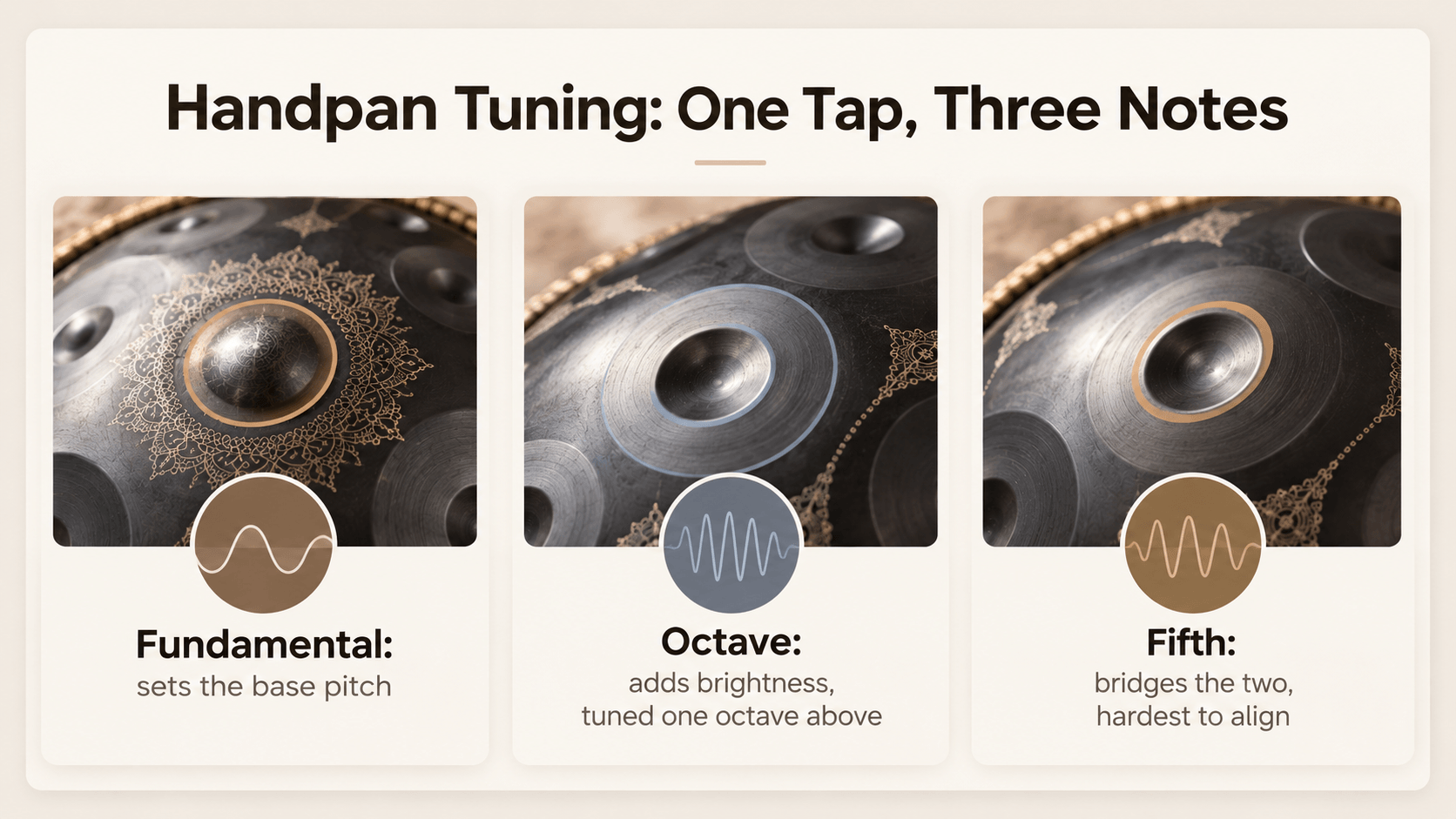
The fundamental note
Strike a single tone field and your ear registers one note, but your ear is being fooled. The fundamental is the anchor pitch, the note you’d name if someone asked what note this is. It’s what a tuner measures first, and it’s what defines the note on a scale chart, such as D3 or A3.
The octave layered on top
Tuned exactly one octave above the fundamental, this second pitch reinforces the base note and gives it brightness. Without a properly tuned octave, a handpan sounds muted even when the fundamental itself is technically correct.
The fifth that ties them together
The fifth is the hardest of the three intervals to place, because it has to sit in tune against both the fundamental and the octave at the same time. Get it slightly off, and the note develops a faint beating or wobble that most players hear as the tone field sounding unfinished, even if they can’t say why. Together, these three pitches form what handpan builders call a compound note, the reason a single strike carries more depth than the same note played on a marimba or a steel tongue drum, where one strike produces one clean pitch and stops there.
| Interval | Role | What It Sounds Like |
|---|---|---|
| Fundamental | Sets the base pitch of the note | Defines which note it is, such as D3 |
| Octave | Reinforces the fundamental one octave up | Adds brightness and carrying power |
| Fifth | Bridges the fundamental and octave | When out of tune, creates a faint wobble or beating |
Why Handpan Makers Tune Three Notes Into One Strike
Tuning three pitches on one piece of steel
Most instruments are built around single note tuning. A guitar string, once tuned, produces one clean pitch per fret. A handpan works differently because each tone field is shaped and hammered to hold three interlocking pitches, not one overtone but two, layered on the fundamental. This compound structure is what gives the instrument its signature depth, but it also means tuning a handpan is closer to tuning three instruments that happen to share the same piece of steel.
Why one adjustment moves the other two
A maker can get the fundamental perfectly in tune and still end up with a note that sounds wrong, because the octave or fifth has drifted during hammering. Each adjustment to one interval can shift the other two, so handpan tuning becomes an iterative process of checking all three together rather than tuning each one and moving on. This is the step where consistency across a production run is won or lost.
Why this only becomes audible under certain conditions
Two handpans in the same scale can sound noticeably different even when both are technically in tune, and a handpan that seems fine when played softly can reveal tuning flaws under harder strikes, when the octave and fifth become more audible.
What makes compound tuning difficult, in short
- Adjusting the fundamental can shift the octave and fifth out of alignment
- The fifth must stay in tune against two reference points at once, not one
- Tuning flaws often only become audible at harder strike velocities
- Consistency across a full scale requires checking every tone field against every other
How the Tuning Process Actually Works
The general sequence
Handpan tuning happens in stages, moving from rough shaping to fine calibration. While techniques vary between workshops, the sequence generally follows a consistent logic.
- Shaping the tone field. The steel is hammered into a shallow dome, which begins to define the fundamental pitch before any fine tuning starts.
- Setting the fundamental. The maker listens and adjusts the depth and curvature of the dome until the fundamental note matches the target pitch.
- Raising the octave. Careful hammering around the fundamental brings the octave into tune, layered directly above it.
- Aligning the fifth. The most delicate stage, where the fifth is tuned to sit correctly against both the fundamental and octave simultaneously.
- Cross checking all three. The maker strikes the note at different velocities to confirm the fundamental, octave and fifth hold together under both soft and hard playing.
- Final listening pass. The completed tone field is compared against the rest of the scale to check for handpan tuning consistency across the whole instrument.
Where tuning stability is built in, or lost
A tone field that is only tuned by ear, without cross checking at different strike velocities, may sound correct in a quiet showroom and drift audibly once it reaches regular use.
Tuned vs. Untuned
Not every steel dome instrument sold as a handpan is actually tuned in this sense. Some budget instruments are shaped to resemble a handpan without the fundamental, octave and fifth being deliberately aligned. The difference is audible immediately, and it directly affects how the instrument is priced, played and resold.
| Aspect | Tuned Handpan | Untuned or Poorly Tuned Handpan |
|---|---|---|
| Sound character | Full, layered tone with audible octave and fifth | Flat, single note tone with little depth |
| Consistency across notes | Each tone field matches the others in the scale | Notes may sound uneven or clash with each other |
| Playing experience | Encourages layering and harmonic playing | Limits the player to basic single note striking |
| Resale and retail value | Holds value, seen as a legitimate instrument | Often priced and perceived as a decorative object |
| Long term stability | Retains tuning with proper care | More prone to noticeable drift over time |
For retailers and studios, this distinction is not a technical detail. It is the difference between stocking an instrument musicians will pay a premium for and stocking something that looks similar in photos but disappoints once played.
How to Check Handpan Tuning Quality Before You Buy
What to listen for
- Strike a note softly, then harder. The octave and fifth should stay audible and in tune at both volumes.
- Play two neighboring notes together. They should blend rather than clash or beat against each other.
- Let a single note ring out fully. A well tuned note sustains cleanly instead of wavering or wobbling as it fades.
- Compare the same note played gently and firmly. If the pitch seems to shift with strike force, the tuning is unstable.
Signs of inconsistent tuning across a batch
This matters most for buyers sourcing multiple units, not just a single instrument:
- Some units sound noticeably brighter or duller than others in the same scale
- The fifth interval is audible on some tone fields but nearly absent on others
- Tuning holds on samples but drifts faster on units from the main production run
- Notes that are in tune individually but clash when played across the full scale
Understanding how tone fields are shaped in the first place helps a buyer ask sharper questions before committing to an order, particularly when sourcing for a wellness studio or retail line where consistency across every unit matters as much as the sound of any single instrument.
Why Handpan Tuning Consistency Matters for Bulk and Wholesale Orders
A single well tuned sample proves a maker can tune one handpan correctly. It does not prove the next fifty units in a production run will sound the same. This is the gap that matters most for importers, wholesalers and studio suppliers placing bulk orders, and it is rarely addressed in consumer facing content about handpan tuning.
What can go wrong across a production batch
- Tuners working at different skill levels within the same factory produce inconsistent results
- Time pressure on large orders can shorten the cross checking stage described above
- Steel from different material batches can behave slightly differently under hammering
- Quality control that only spot checks a sample of units misses drift in the rest of the run
Questions buyers should ask a manufacturer about tuning quality control
- Is every unit tuned and checked individually, or only a sample from each batch?
- What tolerance range is used when confirming the fundamental, octave and fifth are in tune?
- How is tuning stability tested before an order ships?
- Can a pre shipment sample be provided from the actual production batch, not a separate showcase unit?
- What happens if tuning issues are found after delivery?
Asking these questions before placing an order, rather than after a shipment arrives, is the most reliable way to protect against inconsistent tone quality across a bulk purchase.
Sourcing Handpans for Your Studio or Store?
Request a sample tuned to your target scale, or ask us directly about our tuning quality process.
We’ll walk you through it before you commit to an order.
FAQ
What is handpan tuning?
Handpan tuning is the process of shaping and calibrating a tone field so it produces three aligned pitches at once: a fundamental note, an octave above it, and a fifth between them. This compound tuning is what gives a handpan its full, layered sound rather than a single flat tone.
How does handpan tuning work?
A maker hammers the tone field into shape, sets the fundamental pitch first, then raises the octave and aligns the fifth around it. Each interval is cross checked at different strike velocities before the note is considered finished, since adjusting one pitch can shift the other two.
What is the difference between a tuned and an untuned handpan?
A tuned handpan produces a full, layered tone with an audible octave and fifth alongside the fundamental. An untuned or poorly tuned handpan produces a flatter, single note sound, often with uneven pitch across the scale, and is generally treated as a decorative object rather than a playable instrument.
How long does handpan tuning stay accurate?
A properly tuned and cross checked handpan can hold its tuning for years with normal care. Instruments tuned only by ear without checking stability under different strike forces are more likely to drift audibly sooner.
How can I tell if a handpan is well tuned before buying it?
Strike each note softly and then harder, the octave and fifth should stay audible at both volumes. Play neighboring notes together and listen for clashing, and let a single note ring out fully to check that it sustains cleanly instead of wobbling as it fades.
What should wholesale buyers check for tuning consistency across a batch?
Ask whether every unit is tuned and checked individually or only sampled, what tolerance range is used for the fundamental, octave and fifth, and how tuning stability is tested before shipment. Requesting a pre shipment sample from the actual production batch is the most reliable check.
Can a manufacturer guarantee handpan tuning stability across a bulk order?
This depends on the manufacturer’s quality control process, including whether tuning is checked unit by unit and what stability testing is used before shipping. Buyers should confirm this directly with the supplier rather than assuming consistency from a single sample.