
Handpan Drum Guide: How to Choose, Play, and Experience the Healing Power of This Unique Instrument
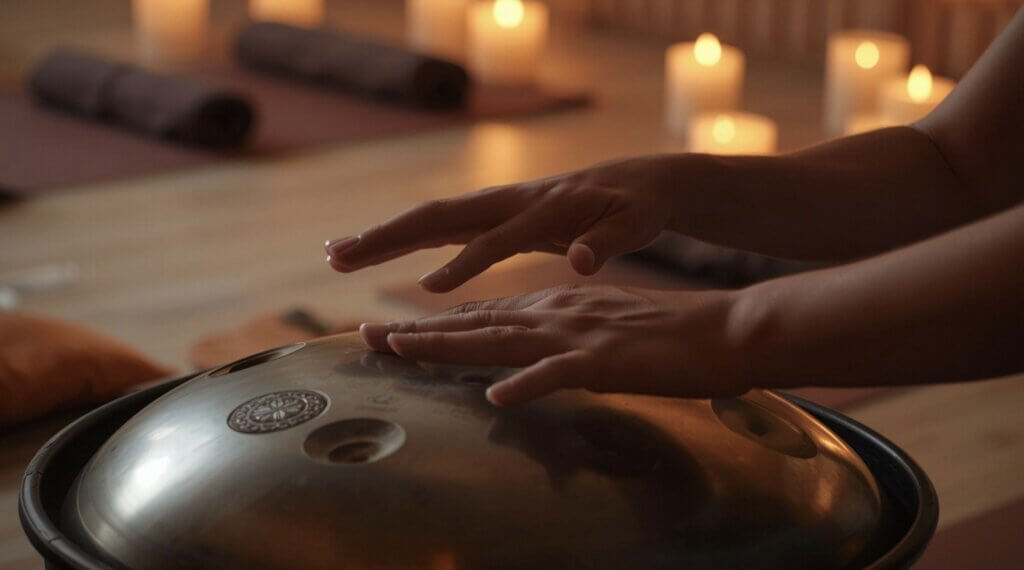
Table of Contents
What Is a Handpan Drum? Understanding the Instrument That Blends Music and Meditation
The Origin of the Handpan: From Hang Drum to Global Phenomenon
Few modern instruments have traveled the world as quickly as the handpan drum. Invented in Switzerland around 2000 by PANArt founders Felix Rohner and Sabina Schärer, the original “Hang” sparked global fascination. Early street performances in Europe went viral online, accelerating demand. Today, hundreds of artisan makers craft handpans using refined steel treatments.
Case insight: A Barcelona busker reported tripling tip income after switching to handpan.
Practical tip: Research makers’ waitlists—top builders often sell out months ahead.
This evolution naturally leads us to its physical design.
Anatomy of a Handpan Drum: Ding, Tone Fields, and Steel Shell
At first glance, the handpan drum resembles a sculptural steel UFO—but its design is deeply acoustic. It consists of two glued steel shells forming a resonant chamber.
Key components:
-
Ding: Central bass note
-
Tone fields: Surrounding tuned notes
-
Gu hole: Bottom resonance port
Each field is hammered to precise frequencies, allowing harmonic layering from a single strike. A German sound engineer’s test showed overtone richness rivaling small harps.
Practical tip: Never place the handpan on hard surfaces—use a padded stand.
Its structure explains the instrument’s hypnotic sound.
Why the Handpan Sounds So Hypnotic
The mesmerizing voice of a handpan drum comes from overtone stacking and long sustain. When struck, each note produces:
-
Fundamental pitch
-
Octave harmonic
-
Fifth overtone
This triad creates a “choir effect.” In relaxation labs, sustained metallic tones have been linked to slower breathing patterns. A yoga instructor in Bali reported participants entering meditation 30% faster with handpan accompaniment.
Practical tip: Play near walls or domes to amplify resonance naturally.
Understanding sound leads directly into tuning and scales.
How Handpan Drums Are Tuned: Scales, Frequencies, and Emotional Expression
Most Popular Handpan Scales
Choosing the right scale defines your musical journey with a handpan drum. Beginner-friendly scales dominate global sales:
| Scale | Mood | Flexibility |
|---|---|---|
| D Kurd | Deep & mystical | Very high |
| Celtic Minor | Gentle & emotional | High |
| Integral | Bright & uplifting | Moderate |
A California retailer noted D Kurd accounts for over 40% of beginner purchases.
Practical tip: Listen to scale demos before buying—notation alone isn’t enough.
Scale choice shapes emotional expression next.
Choosing the Best Handpan Scale for Meditation or Relaxation
Different scales evoke different inner landscapes when played on a handpan drum.
Mood mapping example:
-
Calm grounding → D Kurd / Hijaz
-
Heart-opening → Celtic Minor
-
Joyful uplift → Major / Integral
A retreat center in Thailand rotates scales by session goal—slower scales for breathwork, brighter ones for movement meditation.
Practical tip: For therapy settings, avoid overly complex scales that distract beginners.
Emotional tuning raises an important technical question—stability.
Do Handpans Go Out of Tune? Maintenance & Stability
Despite precision tuning, a handpan drum can shift pitch over time. Causes include:
-
Temperature fluctuations
-
Humidity exposure
-
Physical impact
Professional makers estimate tuning stability at 5–10 years with proper care. Stainless steel models resist rust but may require gentler handling.
Maintenance checklist:
-
Oil monthly
-
Store in padded case
-
Avoid direct sun
A touring musician once detuned a note after airline mishandling—insurance matters.
With care understood, we can begin playing.
How to Play the Handpan Drum: A Beginner-Friendly Learning Path
Basic Hand Techniques and Striking Methods
Your first touch on a handpan drum determines tone quality. Unlike drums, force is minimal.
Core techniques:
-
Finger pad taps → Warm tones
-
Thumb strikes → Accents
-
Slaps → Percussive effects
A Paris conservatory workshop found beginners produced clean tones within 20 minutes using pad strikes alone.
Practical tip: Keep wrists loose—tension kills resonance.
Technique mastery opens the door to rhythm.
Easy Handpan Rhythms for Beginners
Rhythm is where the handpan drum becomes intuitive. Most beginners start with 4/4 or 3/4 pulse patterns.
Starter pattern example:
-
Ding (bass)
-
Right tone
-
Left tone
-
Ding repeat
Street performers often loop simple sequences for hours, building trance-like atmospheres. A YouTube creator grew to 500K subscribers using only beginner rhythms.
Practical tip: Use a metronome at 60–70 BPM for meditative pacing.
Soon, many ask if music training is required.
Can You Learn Handpan Without Musical Experience?
One reason the handpan drum spread globally is its accessibility. Notes are pre-tuned harmonically—meaning “wrong notes” are rare. Even non-musicians can improvise pleasing melodies.
A corporate wellness program in Singapore introduced handpan sessions to executives—90% had no musical background, yet group performances formed within an hour.
Why it’s beginner-friendly:
-
No chords to memorize
-
Intuitive layout
-
Meditative tempo
Practical tip: Start with 8–9 note handpans for simplicity.
This ease of learning naturally leads into its therapeutic applications.
Handpan Drum for Sound Healing, Yoga, and Mindfulness
Why Handpans Are Used in Meditation and Therapy
In wellness spaces worldwide, the handpan drum has become a signature sound of calm. Its slow, resonant tones naturally guide breathing into deeper rhythms—a principle used in vibrational therapy. Therapists report that sustained metallic frequencies help lower perceived stress levels during sessions.
Case study: A UK sound therapist integrated handpan sessions into anxiety treatment, noting improved relaxation within 10 minutes.
Why it works:
-
Breath synchronization with tempo
-
Full-body vibration resonance
-
Emotional release through harmonic tones
Practical tip: Play at 60 BPM to match resting heart rate.
These physiological effects connect directly to brainwave science.
Handpan Frequencies and Brainwave Relaxation
The soothing effect of a handpan drum isn’t just emotional—it’s neurological. Slow, sustained tones are associated with alpha and theta brainwave activation, the same states linked to meditation and early sleep cycles.
Research insight: Sound therapy studies show low-frequency resonance can support parasympathetic nervous system activation.
Frequency impact overview:
| Brainwave | State | Handpan Effect |
|---|---|---|
| Alpha | Relaxed focus | Breath slows |
| Theta | Deep meditation | Emotional processing |
Practical tip: Use spacious playing intervals to allow resonance decay.
These brainwave shifts explain why handpans are now standard in wellness environments.
Wellness Applications: Yoga Studios, Retreats, Therapy Rooms
From Bali retreats to urban yoga lofts, the handpan drum is now a professional wellness tool. Its portability and immersive tone make it ideal for live therapeutic soundscapes.
Common applications:
-
Yin yoga accompaniment
-
Breathwork ceremonies
-
Trauma-release therapy
-
Mindfulness workshops
Real example: A California retreat center added weekly handpan sound baths and reported a 25% rise in repeat bookings.
Practical tip: Pair handpan with singing bowls for layered healing frequencies.
Its growing adoption also drives demand among buyers—leading to purchasing considerations.
5. How to Choose the Right Handpan Drum (Buyer’s Guide)
Stainless Steel vs Nitrided Steel Handpans
Material choice dramatically shapes the voice of a handpan drum. The two dominant constructions—stainless and nitrided steel—serve different players.
| Feature | Stainless Steel | Nitrided Steel |
|---|---|---|
| Sustain | Very long | Moderate |
| Tone warmth | Bright & pure | Warm & earthy |
| Rust resistance | High | Moderate |
Case insight: Outdoor performers favor stainless models for climate durability.
Practical tip: Choose nitrided for studio recording, stainless for ambient meditation.
Material selection influences pricing next.
Handpan Price Guide: How Much Does a Handpan Cost?
The price of a handpan drum reflects craftsmanship, tuning precision, and material quality. Unlike factory instruments, many are handmade over weeks.
Typical price tiers:
| Level | Price Range | Buyer Type |
|---|---|---|
| Entry | $1,200–$1,800 | Beginners |
| Mid-tier | $1,800–$2,800 | Hobbyists |
| Premium | $3,000–$4,500+ | Professionals |
A European maker reports 30–40 labor hours per instrument.
Practical tip: Avoid unusually cheap handpans—they often detune quickly.
Budget clarity leads to skill-level matching.
Best Handpan Drums for Beginners vs Professionals
Selecting the right handpan drum depends on musical goals and experience.
Beginner recommendations:
-
8–9 notes
-
D Kurd scale
-
Nitrided steel
-
Lower cost range
Professional preferences:
-
10–13 notes
-
Custom scales
-
Stainless steel sustain
-
Expanded harmonic range
Case example: A film composer upgraded to a 13-note handpan for soundtrack layering flexibility.
Practical tip: More notes = steeper learning curve.
Choice of instrument also depends on maker reliability.
Trusted Handpan Makers and Where to Buy
Because each handpan drum is artisan-crafted, the maker matters as much as the scale. Established builders maintain tuning stability and steel treatment standards.
Buying channels:
-
Direct artisan workshops
-
Authorized distributors
-
Handpan festivals
-
Online maker directories
Risk alert: Mass-produced handpans may look identical but lack harmonic balance.
Practical tip: Request sound samples of the exact instrument before purchase.
With ownership decided, comparisons to other healing tools become relevant.
6. Handpan Drum vs Other Sound Healing Instruments
Handpan vs Singing Bowls
Both instruments dominate meditation spaces, yet their sonic roles differ. A handpan drum produces melodic rhythms, while singing bowls generate continuous drones.
| Feature | Handpan | Singing Bowl |
|---|---|---|
| Play style | Rhythmic & melodic | Sustained tone |
| Portability | Moderate | High |
| Learning curve | Easy | Very easy |
Case insight: Therapists often open sessions with bowls, then transition to handpan journeys.
Practical tip: Combine both for dynamic sound baths.
Comparison expands further with tongue drums.
Handpan vs Steel Tongue Drum
At a glance, they appear similar—but acoustically they differ greatly. Steel tongue drums use cut tongues rather than hammered tone fields.
Key contrasts:
-
Handpan drum → richer overtones
-
Tongue drum → softer, simpler tones
-
Handpan → hand-crafted tuning
-
Tongue drum → factory tuned
Budget note: Tongue drums cost 70–80% less on average.
Practical tip: Start with tongue drum if budget is limited, then upgrade.
Ultimately, instrument choice depends on therapeutic goals.
Which Instrument Is Best for Sound Therapy?
Selecting the ideal sound healing tool depends on session intent, budget, and practitioner skill.
Decision guide:
| Goal | Best Instrument |
|---|---|
| Deep meditation | Handpan drum |
| Energy cleansing | Singing bowls |
| Beginner therapy | Tongue drum |
Real-world use: Multi-instrument therapists report higher engagement when alternating textures.
Practical tip: Invest first in the instrument that aligns with your primary modality.
From here, readers are ready to explore FAQs and final purchase decisions.
7. Frequently Asked Questions About Handpan Drums
(FAQ Schema-ready | One-paragraph answers recommended)
What is the difference between a Hang drum and a handpan drum?
Hang is the original patented instrument; handpan is the broader instrument category.
How much does a quality handpan drum cost?
Typically ranges from $1,500 to $4,000+ depending on maker and material.
Is the handpan drum hard to learn?
No—beginners can create relaxing rhythms quickly.
What is the best handpan scale for beginners?
D Kurd is widely recommended for versatility.
Can handpans be used for professional sound healing?
Yes—commonly used in therapy, yoga, and meditation sessions.
Do handpans require maintenance?
Yes—regular oiling and careful storage prevent rust and detuning.
Let the Handpan Drum Become Your Gateway to Sound, Stillness, and Self-Connection
Whether you’re drawn to its celestial tones, therapeutic resonance, or meditative playstyle, the handpan drum stands at the intersection of music and mindfulness. From its Swiss origins to modern sound-healing spaces, this instrument has proven its power to calm the mind, regulate breath, and inspire emotional release. Beginners appreciate its intuitive layout, while professionals value its depth, sustain, and therapeutic range.
If you’re ready to explore the world of handpan more deeply—whether for personal meditation, yoga facilitation, or professional sound healing—choosing a trusted source is essential.
Begin Your Handpan Journey
Discover artisan-crafted instruments, sound healing tools, and professional guidance at
DionysusArtcrafts
Let your first note be the start of a more resonant life.