
Sound Healing Instruments: The Science of Alpha Waves, Therapeutic Benefits
What Is Sound Healing? The Science Behind How It Works
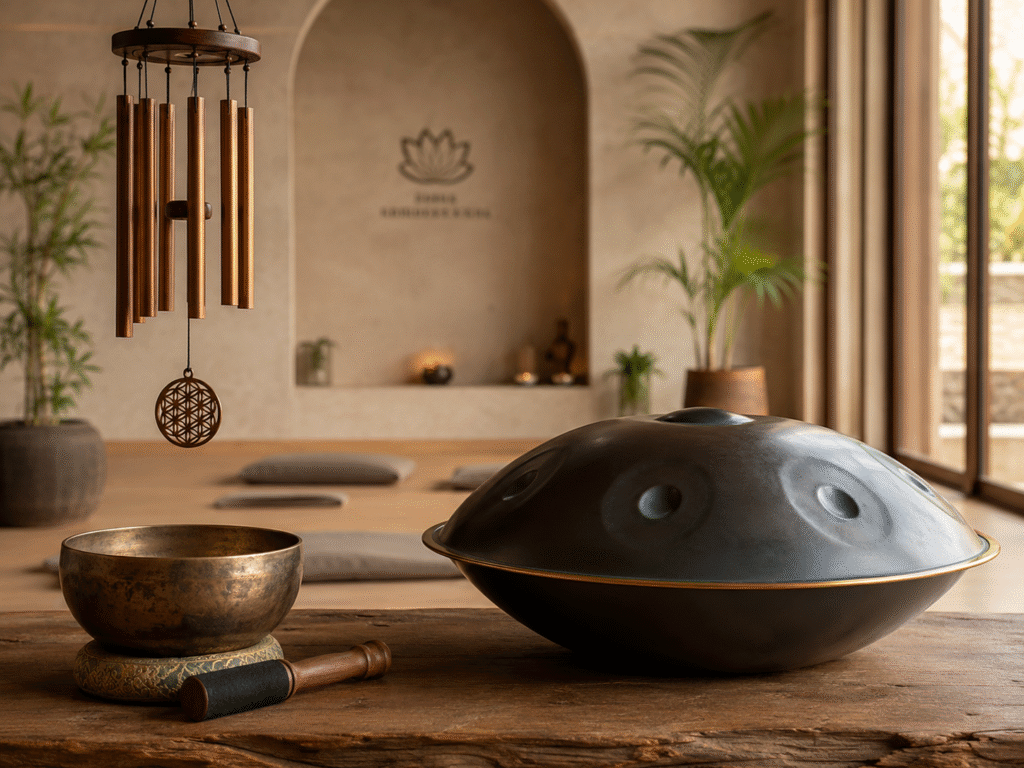
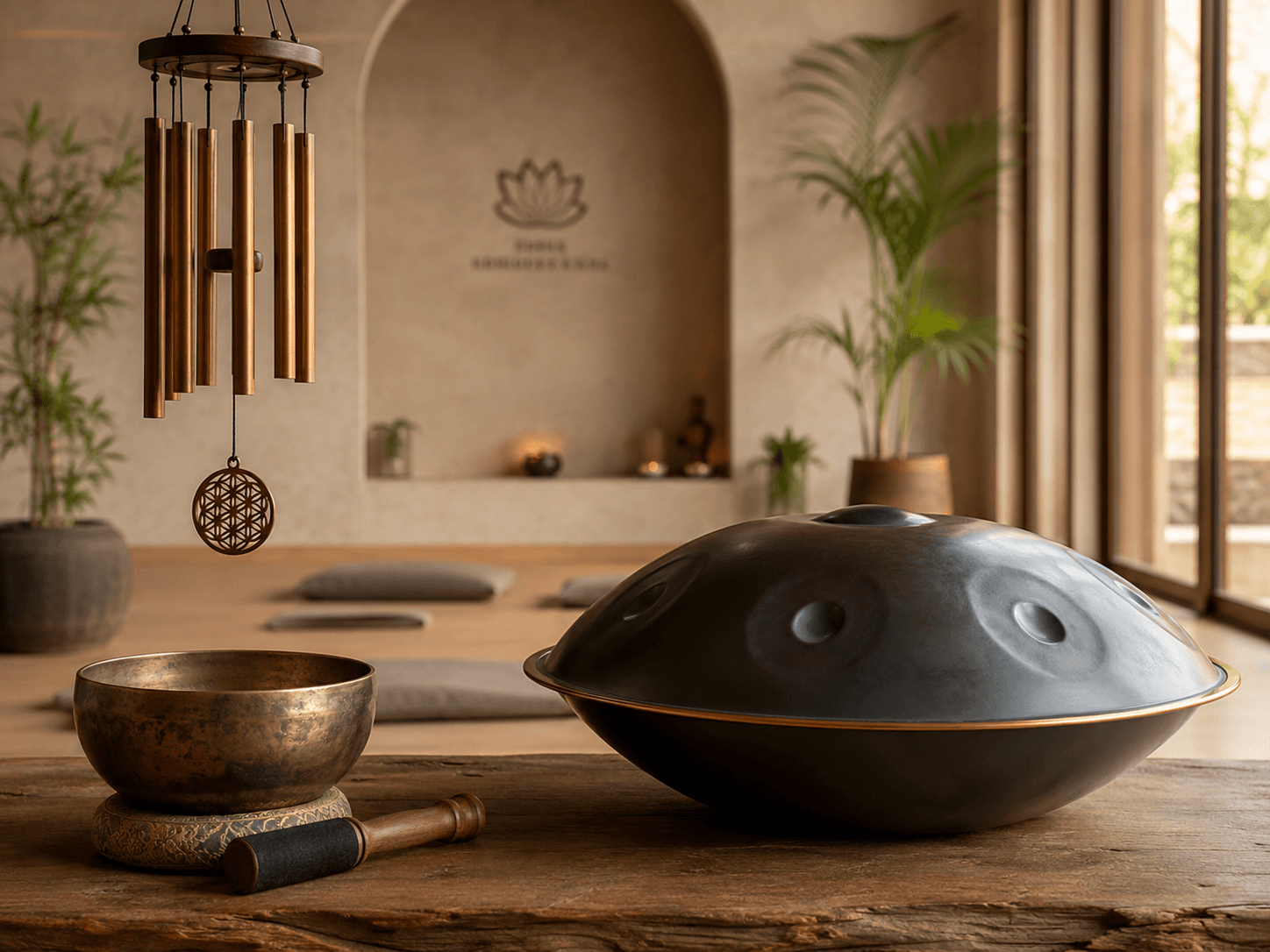
Sound healing instruments like singing bowls, handpans, and wind chimes produce sustained vibrations that entrain the brain toward alpha wave states (8–12 Hz) — linked to deep relaxation, stress reduction, and mental clarity. Used in clinical and wellness settings worldwide, these tools are backed by peer-reviewed research and are increasingly sought by studios, therapists, and retailers.
From Ancient Practice to Modern Neuroscience
Sound healing predates modern medicine by millennia — and science is now catching up:
- Ancient origins: Tibetan monks used metal singing bowls for over 2,000 years; ancient Greek physicians prescribed music to treat mental disorders
- Modern validation: Neuroimaging studies now confirm that sustained acoustic vibration measurably alters brain activity, reduces cortisol, and shifts the nervous system into a restorative state
- Where it stands today: Sound healing sits at the intersection of acoustic physics, neuroscience, and integrative medicine — no longer fringe, but increasingly integrated into clinical wellness settings
How Sound Vibration Affects the Body at a Cellular Level
Sound is physically felt, not just heard. Acoustic waves travel through tissue and activate the body’s mechanoreceptors.
| Level | What Happens |
|---|---|
| Cellular | Acoustic waves stimulate mechanoreceptors; influences gene expression, cell adhesion, and inflammation (Nature Biotechnology, 2025) |
| Psychological | Significant reductions in tension, anger, fatigue, and depressed mood (Goldsby et al., PLOS ONE, 2016 — 62 participants) |
| Physiological | Improved circulation and lymphatic flow; enhanced natural healing response |
The Parasympathetic Effect: Why You Feel Calm
When sustained tones fill a space, the autonomic nervous system responds almost immediately:
- Limbic system signals safety — sustained, non-threatening sound tells the brain the environment is safe
- Sympathetic/Parasympathetic shift — cortisol output drops; the body moves from “fight or flight” to “rest and digest”
- Vagus nerve activation — a key pathway for stress regulation, triggered by slow, resonant frequencies
- Measurable outcomes — a 2020 study by Matziorinis & Koelsch (Annals of the New York Academy of Sciences) confirmed music-induced relaxation reliably reduces heart rate and increases heart rate variability
Sound healing instruments achieve this shift faster than silence alone because the auditory stimulus gives the nervous system something concrete to follow.
Alpha Waves Explained: The Brain State Sound Healing Targets
Beta, Alpha, Theta, Delta: The Brainwave Spectrum
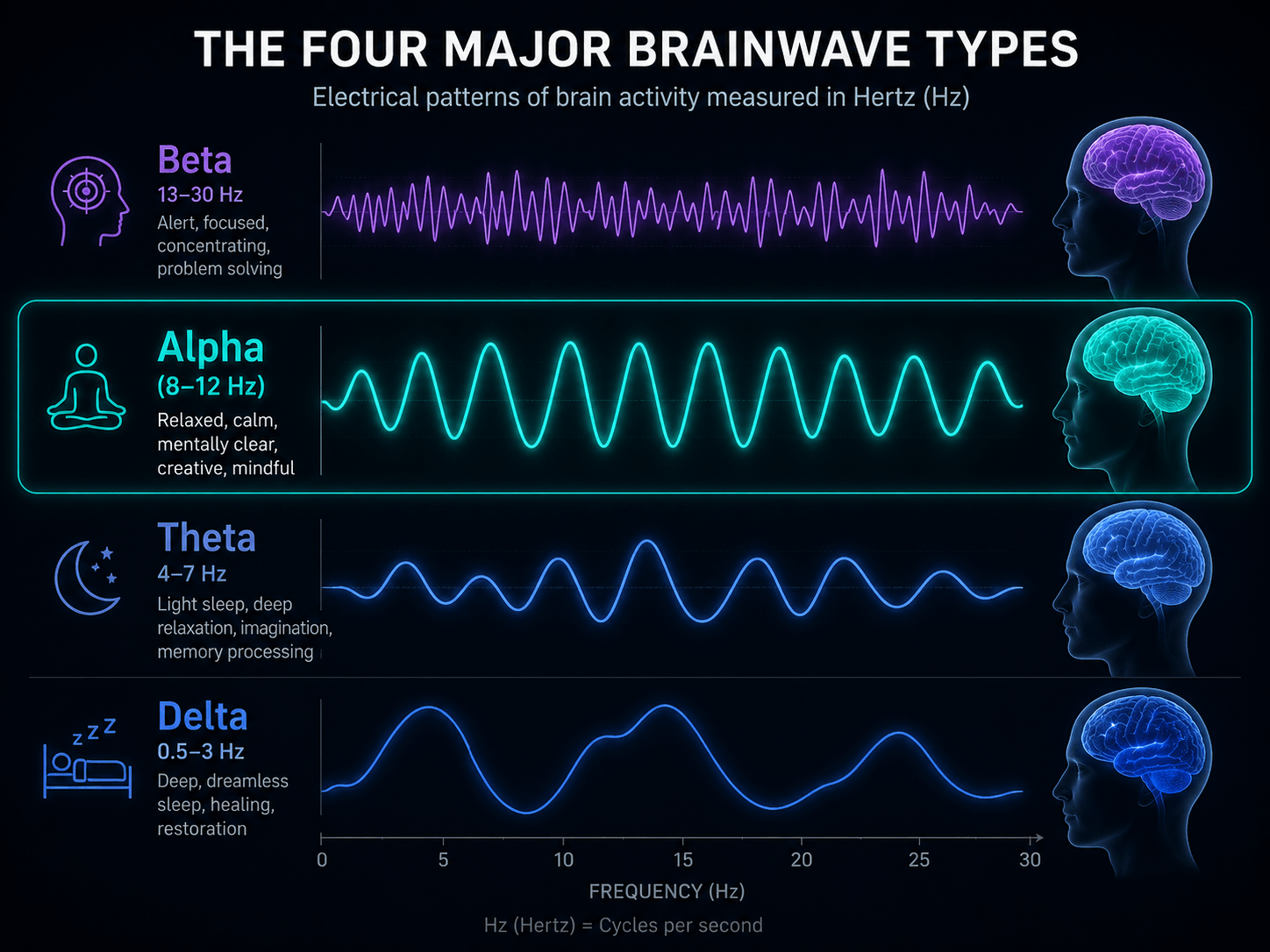
Your brain constantly produces electrical activity that varies in frequency depending on your mental state:
| Brainwave | Frequency | Mental State | Common Trigger |
|---|---|---|---|
| Beta | 13–30 Hz | Alert, stressed, focused | Work, anxiety, problem-solving |
| Alpha | 8–12 Hz | Relaxed alertness, calm focus | Meditation, light relaxation, flow state |
| Theta | 4–8 Hz | Deep meditation, creativity | Daydreaming, early sleep, hypnosis |
| Delta | 0.5–4 Hz | Deep sleep, unconscious healing | Deep sleep, restoration |
How Sound Instruments Induce Alpha States (8–12 Hz)
Two scientifically studied mechanisms explain how acoustic instruments entrain the brain:
- Binaural beats: Two slightly different frequencies played in each ear create a perceived “beat” at their difference — e.g., 200 Hz (left) + 192 Hz (right) = an 8 Hz alpha beat. Requires headphones.
- Isochronic tones: A single pulsed tone switching on and off at precise intervals — no headphones needed, making it practical for live instrument settings
- Acoustic instrument entrainment: Singing bowls, handpans, and wind chimes naturally produce complex overtone series that hover in or near alpha/theta frequency ranges. The brain synchronizes to these dominant frequencies through a process called frequency following response (FFR)
What Research Says About Alpha Wave Therapy
The evidence base is growing and credible:
| Study | Finding |
|---|---|
| Goldsby et al., Journal of Evidence-Based Complementary & Alternative Medicine (2017) | Sound meditation significantly reduced tension, anxiety, and physical pain in participants with no prior experience |
| Matziorinis & Koelsch, Annals of the New York Academy of Sciences (2020) | Music-induced relaxation reliably activates parasympathetic nervous system markers |
| Frontiers in Digital Health (2025) | AI-integrated brainwave entrainment combined with music therapy shows measurable therapeutic outcomes for stress and focus disorders |
Alpha wave therapy is no longer alternative — it’s increasingly referenced in peer-reviewed clinical literature as a valid, low-risk intervention for stress and anxiety management.
Singing Bowls — Deep Resonance for Meditative Alpha States
How Singing Bowl Frequencies Entrain the Brain
Singing bowls don’t produce a single note — they produce a rich stack of overtones that ripple across the alpha and theta frequency ranges simultaneously:
- Fundamental tone: The primary, lowest pitch when the bowl is struck or rimmed
- Overtones: Multiple harmonic frequencies layered above the fundamental — the signature “shimmer” of a quality bowl
- Sustained vibration: Unlike a piano key that fades, a rimmed singing bowl sustains tone for 30–60+ seconds, giving the brain time to entrain
The 432 Hz vs. 440 Hz debate:
| Tuning | Claim | Evidence |
|---|---|---|
| 432 Hz | More “natural,” resonates with the body, preferred by sound healers | Anecdotal; popular in wellness communities |
| 440 Hz | International standard (ISO 16), used in most modern tuning | Standardized; no clinical evidence that 432 Hz is therapeutically superior |
What to Look for When Sourcing Singing Bowls (B2B Quality Criteria)
Not all singing bowls are therapeutic instruments — many are decorative. Key criteria for B2B procurement:
- Tuning certification: Bowl should come with a frequency certificate showing fundamental tone and primary overtones
- Hand-hammered construction: Machine-pressed bowls lack the overtone complexity needed for entrainment
- Harmonic layering: Strike the bowl and listen for at least 2–3 distinct tones fading at different rates — this is the therapeutic signature
- Consistent sustain: Quality bowls sustain a tone for at least 45 seconds when properly rimmed
- Avoid: Bowls sold purely on aesthetics, painted surfaces (dampens vibration), or those with no stated tuning information
Handpan Drums — Full-Body Resonance and Emotional Release
The Unique Acoustic Properties of the Handpan
The handpan is one of the most acoustically complex instruments in sound therapy — and one of the most powerful for alpha entrainment:
- Construction: Two hand-hammered steel half-shells form a convex body; tone fields are individually hammered and tuned around a central “ding” note
- Harmonic structure: Each note produces a fundamental, an octave, and a compound fifth — three tones simultaneously, creating instant consonance
- Why it entrains: The layered harmonics and natural reverb decay closely mimic the sustained tone conditions needed for frequency following response (FFR)
- Frequency range: Most handpans are tuned between D3 and A5, placing them squarely in the range most effective for meditative soundscapes
Handpan in Sound Therapy Sessions — Clinical and Studio Use
The handpan has moved from street performance to clinical application remarkably quickly:
- Wellness retreats: Centers like the Esalen Institute (California) and various European trauma retreats have incorporated live handpan into body-oriented therapy sessions
- Trauma-informed therapy: The handpan’s non-percussive, melodic quality makes it suitable for clients who are triggered by sharp or loud sounds — unlike gongs or drums
- Group sound baths: A single handpan player can hold a group of 10–30 people in a sustained alpha/theta state for 30–60 minutes without electronic amplification
- Yoga studios: Increasingly used for savasana and closing meditation sequences as a premium alternative to recorded music
B2B Sourcing Guide — What Distinguishes a Therapeutic-Grade Handpan
Handpans range from $800 to $5,000+. For B2B buyers, the difference matters significantly:
| Criteria | What to Look For |
|---|---|
| Steel quality | Nitrided or stainless steel — more stable tuning, weather resistant |
| Tuning standard | Hand-tuned to 440 Hz (international standard); each note individually verified |
| Maker reputation | Established builders: PANArt (Switzerland, the original), Ayasa, Saraz, Echo Sound Sculpture |
| Harmonic accuracy | Each tone field should sound its octave and fifth cleanly when struck — request an audio demo before ordering |
| MOQ & lead time | Most quality makers have 3–12 month lead times; plan procurement well in advance |
Practical tip: For studios or retailers new to handpans, start with a D minor Kurd or Celtic minor scale — the most universally calming and versatile tunings for therapeutic use.
Wind Chimes — The Overlooked Instrument in Sound Therapy
How Wind Chimes Create Therapeutic Soundscapes
Wind chimes work differently from bowls or handpans — and that difference is therapeutically valuable:
- Randomized tonal patterns: Unlike instruments played intentionally, wind chimes produce tones in unpredictable sequences — the brain cannot anticipate the next sound, which prevents analytical engagement and promotes passive relaxation
- Pentatonic tuning: Quality therapeutic wind chimes are tuned to pentatonic scales (5-note scales with no dissonant intervals), meaning any combination of notes sounds harmonious — no jarring clashes
- Ambient layering: Wind chimes add a continuous, low-attention sonic layer to a space without requiring active listening — ideal for waiting rooms, therapy corridors, and retail environments
- Frequency range: Most aluminum wind chimes produce tones between 200–1,500 Hz, well within the range that activates the auditory cortex’s relaxation response
Wind Chimes in Clinical and Retail Wellness Environments
Wind chimes are underused in professional settings despite strong practical advantages:
- Healthcare waiting rooms: Hospitals and outpatient clinics use ambient sound to reduce perceived wait time and pre-procedure anxiety — wind chimes provide this passively with no staff involvement
- Spa and retail atmosphere: Studies on retail soundscaping (North, Hargreaves & McKendrick, Journal of Applied Psychology, 1999) show ambient music and tonal sound measurably influence customer dwell time and purchase behavior
- Therapy practice entrances: Placing wind chimes at the entry of a therapy space creates an acoustic “threshold” — a sensory cue that signals transition from the outside world to a therapeutic environment
- Outdoor wellness spaces: Meditation gardens, retreat center walkways, and yoga studios with outdoor decks benefit from wind chimes as a passive, weather-activated sound tool
Selecting Wind Chimes for Sound Healing — Tuning, Material & Scale
| Feature | Options | Best For |
|---|---|---|
| Material | Aluminum | Bright, clear, long sustain — most common for therapeutic use |
| Bamboo | Warm, earthy, shorter sustain — natural/organic aesthetic | |
| Steel | Deep, rich tone — outdoor durability | |
| Scale | Pentatonic | Universal — any note combination is harmonious |
| Diatonic | More musical variety, but occasional dissonance | |
| Tube length | Longer tubes (60cm+) | Lower frequencies, more meditative |
| Shorter tubes | Higher frequencies, brighter and more alert |
B2B quality checklist:
- Tuning verified by manufacturer (pentatonic scale stated)
- Tubes made from aircraft-grade aluminum for consistent resonance
- Clapper and sail material allows free movement in light air movement
- Suspension cord rated for outdoor UV exposure (for outdoor installations)
B2B Buyer’s Guide — Sourcing Sound Healing Instruments for Your Business
What Wellness Studios, Retailers & Therapists Should Evaluate
Before placing a wholesale order, evaluate instruments across these four dimensions:
| Dimension | Key Questions |
|---|---|
| Acoustic quality | Is tuning certified? Does the instrument sustain tone long enough for entrainment? |
| Construction | Handcrafted or mass-produced? Material grade? Any surface treatments that dampen vibration? |
| Therapeutic fit | Is this instrument appropriate for your client base — individual therapy, group sessions, or retail display? |
| Supplier reliability | Can the supplier provide consistent quality across repeat orders? Is lead time manageable? |
Minimum order and sourcing considerations:
- Singing bowls: Most wholesalers offer MOQs of 10–20 units; expect 4–8 week lead times for handcrafted stock
- Handpans: Small MOQs (1–3 units) are standard; lead times of 3–12 months from top makers
- Wind chimes: High-volume availability; MOQs of 12–24 units common; fastest procurement of the three
Building a Sound Healing Product Line — Instrument Combinations That Work
Different business types need different instrument mixes:
| Business Type | Recommended Core Set |
|---|---|
| Yoga / meditation studio | 2–3 Tibetan singing bowls (different sizes) + 1 handpan for savasana + pentatonic wind chimes for entrance area |
| Spa or wellness center | Crystal singing bowls for ambient group sessions + wind chimes for treatment corridors |
| Sound bath practitioner | 7-note chakra singing bowl set + 1–2 handpans + gong for opening/closing |
| Wellness retail store | Display-grade singing bowls at multiple price points + wind chimes as impulse purchase + handpan as premium centerpiece |
| Therapist / clinic | 1–2 Tibetan bowls for hands-on work + wind chimes for waiting area |
ROI and Business Case for Stocking Sound Healing Instruments
The market fundamentals support investment in this category:
- Market growth: The global sound therapy market was valued at approximately $2.4 billion in 2023 and is projected to grow at a CAGR of 7.1% through 2030 (Grand View Research, 2023)
- Consumer demand shift: Post-pandemic wellness spending has shifted toward experiential and sensory products — sound healing instruments sit at this intersection
- Retail margins: Singing bowls typically carry 40–60% retail margins; handpans, as premium items, can reach 25–35% even at higher price points
- Upsell ecosystem: Each instrument naturally anchors complementary products — mallets, cushions, carrying cases, instructional content, and workshop packages
Practical tip: Stock instruments across three price tiers (entry, mid, premium) to serve walk-in customers, serious practitioners, and institutional buyers from a single product line.
FAQ
Q1: What are sound healing instruments? A: Sound healing instruments — such as singing bowls, handpans, and wind chimes — produce sustained acoustic vibrations that entrain the brain toward alpha and theta wave states, promoting deep relaxation and stress relief.
Q2: How do singing bowls produce alpha waves? A: Singing bowls generate rich overtones that trigger frequency following response (FFR) — a process where the brain synchronizes its electrical activity to match the dominant frequency it hears, naturally shifting into a calm alpha state.
Q3: What is the difference between sound healing and sound therapy? A: Sound healing is a broad wellness practice used in everyday settings like studios and retreats; sound therapy is a structured, clinician-led intervention targeting specific conditions such as anxiety or chronic pain.
Q4: How long does it take for sound healing to produce a noticeable effect? A: Most people feel a shift within 5–10 minutes; the 2017 Goldsby et al. study found significant reductions in tension and anxiety after just one 60-minute session.
Q5: Which sound healing instrument is best for beginners? A: A Tibetan singing bowl — durable, easy to play, widely available across price points, and versatile enough for both individual therapy and group sessions.
Q6: What should I look for when buying sound healing instruments wholesale? A: Prioritize tuning certification, handcrafted construction, verified material quality, and supplier consistency — always request sample units before committing to bulk orders.
Q7: Can wind chimes be used for professional sound therapy? A: Yes — pentatonic-tuned aluminum wind chimes create passive therapeutic soundscapes proven to reduce ambient stress in clinical, retail, and wellness environments without requiring a trained practitioner.
Ready to Source Therapeutic-Grade Sound Healing Instruments? Get in touch with Dionysus Art Crafts for wholesale pricing.
At Dionysus Art Crafts, we supply handcrafted singing bowls, handpan drums, and wind chimes to wellness studios, retailers, and practitioners worldwide. Every instrument is selected for acoustic quality — not just aesthetics.
Contact us today to discuss your requirements, request samples, or get a wholesale quote.